

Price list
Profile
Management
0901 868 786
Price list
Profile
Management
0901 868 786

In 2022, many businesses found themselves in a difficult position as orders ran dry and revenues declined. While some companies chose to cut down personnel to ease financial burdens, others decided to downsize office spaces and cut unnecessary expenses to weather the hard times.
According to information from the Ho Chi Minh City Business Association, export orders for the garment and textile industry experienced a sharp drop in 2022. Specifically, orders from Europe decreased by 60%, and the US by 30-40%. Meanwhile, inventories rose, accounting for 20-25%. Forecasts indicate that by the first quarter of 2023, many businesses will lack new customers. Beyond garments and textiles, order shortages also hit sectors such as electronics, wood products, footwear, and plastics.
Not only in manufacturing, but many businesses in consumer and service industries were also heavily impacted by rising inflation, leading to reduced market demand and tightened consumer spending.
The monetary and financial market also negatively affected corporate production and business activities. Projections for the final months of 2022 indicated that the USD exchange rate would continue to rise by about 4% compared to the beginning of the year, with USD and VND lending rates expected to increase by 0.5-1% by the end of 2022, driving up corporate financial costs. These exact reasons forced many businesses to carefully figure out how to "tighten spending," with personnel reduction emerging as a common choice to alleviate financial pressure.

Mr. Tran Thanh Hai, Permanent Vice President of the Vietnam General Confederation of Labor, stated that more than 240,000 workers in textiles, leather-footwear, and wood processing lacked jobs around the year-end due to production cuts or waiting for orders. However, these figures could realistically be higher given the large number of enterprises, wide geographical spread, and unpublicized updates from some businesses.
Is downsizing personnel the best solution right now? Many managers argue that sourcing experienced labor dedicated to the company is far from easy. If personnel are cut, businesses will face an even more grueling recruitment and training process once the market recovers. Therefore, many companies still strive to retain staff through measures like rotational leaves, seeking new orders, expanding markets, and operating on non-profit models.
Concurrently, various expenditures are heavily scrutinized or temporarily suspended, including business travel fees, free meals, tourism, utilities, PR campaigns, and event organization.
Today, a highly effective "lifeline" trend gaining popularity among businesses to cut financial burdens is downsizing office and warehouse spaces to optimize usable square footage.
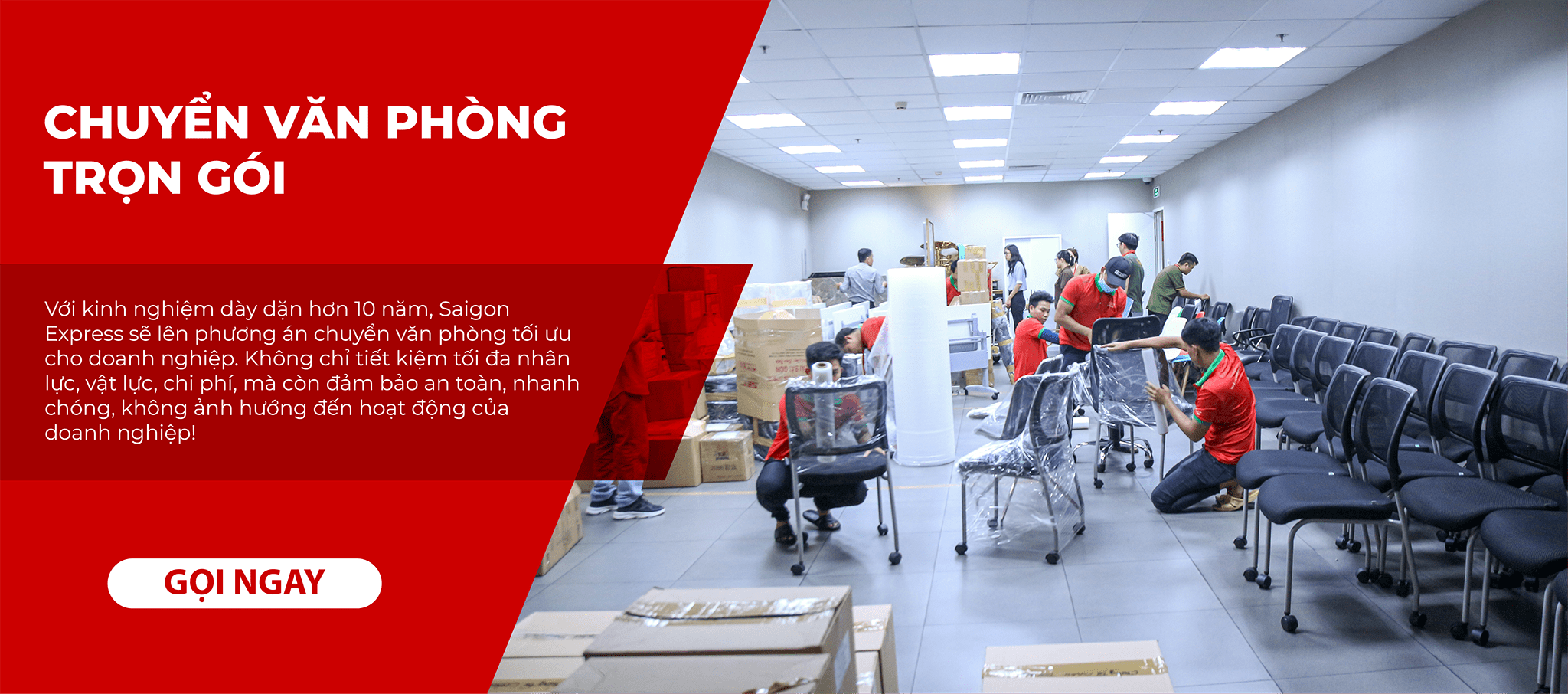
Accordingly, many enterprises "drop excess offices," convert office functions into storage rooms, or relocate headquarters to smaller premises to cut rental costs. Meanwhile, non-essential machinery, equipment, and office files are sent to temporary storage rentals while waiting for conditions to stabilize.
Traditional warehouse leasing is also being reconsidered in favor of fulfilment and logistics warehouse services for greater flexibility and economy. Ms. Truong Hong Nga, owner of a furniture business in District 10, shared: “When market consumption drops, the volume of goods we import is no longer as large as before. Thus, factory lease costs and warehouse operations become a budget burden. By using service-based warehousing, businesses enjoy flexibility in time and rented area, as costs fluctuate directly with actual stored inventory.”
Mr. Huynh Thanh Linh, Managing Director of Saigon Express Corporation, shared: “In the final months of the year, the volume of enterprises renting warehouses at Saigon Express has trended upward. Alongside clients renting spaces for Tet holiday goods storage, quite a few businesses are leasing warehouses to temporarily store office equipment and documentation.” Mr. Linh added that to support companies through tough times, the company offers a 40% discount on transportation freight for warehouse leasing clients.
Not only in Vietnam, but the economic downturn has also driven many countries into comprehensive spending cuts to save costs. The market is forecasted to remain volatile. Based on actual conditions, business owners must exercise sound judgment to evaluate and choose the most suitable solution for their enterprises.
AUTHORS

Call center :
0901 868 786
Hotlines Ho Chi Minh :
0901 868 786 - 0939 176 176
Hotlines Ha Noi :
0949 668 875 - 0931 228 875
Hotlines Can Tho :
0901 868 786 - (028) 3776 0700
Hotlines Da Nang :
0901 868 786 - (028) 3776 0700
Hotlines Hai Phong :
0901 868 786 - (028) 3776 0700
24/7 support and Zalo:
0901 868 786


 HO CHI MINH:
Add: 121 Hoang Quoc Viet, Phu Thuan Ward, District 7, City. HCM
Tel: 0901 86 87 86 - (028) 3776 0700
Email: kinhdoanh@sec-warehouse.vn
CAN THO:
Add: National Highway 1A, Hung Thai Ward, Cai Rang District, Can Tho (New Can Tho Bus Station)
Tel: 0901 86 87 86 - (028) 3776 0700
Email: kinhdoanh@sec-warehouse.vn
HA NOI:
Add: 98 Nguyen Van Giap Street, Cau Dien Ward, Nam Tu Liem District, City. Hanoi
Tel: 0949 668 875 - (024) 7302 2227
Email: info.hanoi@sec-warehouse.vn
HAI PHONG:
Add: Vinh Niem Industrial Cluster, Le Chan District, City. Hai Phong
Tel: 0901 86 87 86 - (028) 3776 0700
Email: kinhdoanh@sec-warehouse.vn


DA NANG:
Add: Lot 39, Street 2, Da Nang Industrial Park, An Hai Bac Ward, Son Tra District, City. Danang
Tel: 0901 868 786 - (028) 3776 0700
Email: kinhdoanh@sec-warehouse.vn


.png "Viber 0901868786")